
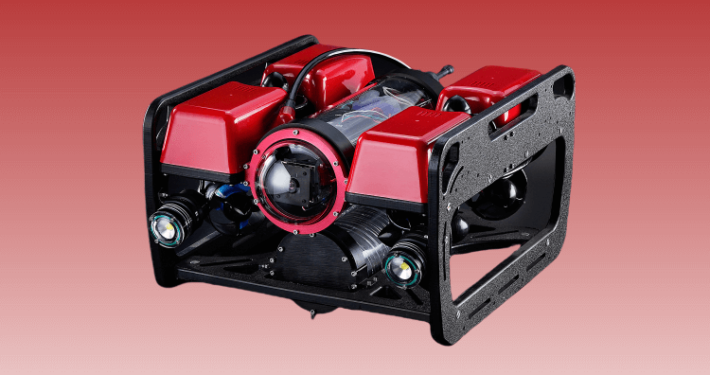
Are you thinking an ROV is just an underwater drone? This common mistake can lead to costly purchasing errors, failed missions, and a lot of frustration on the job site.
An ROV is not just a camera in the water; it’s a complete underwater work system[^1]. Its effectiveness depends on integrating the vehicle, tether, controls, and mission-specific tools[^2] to handle real-world conditions like currents and low visibility.
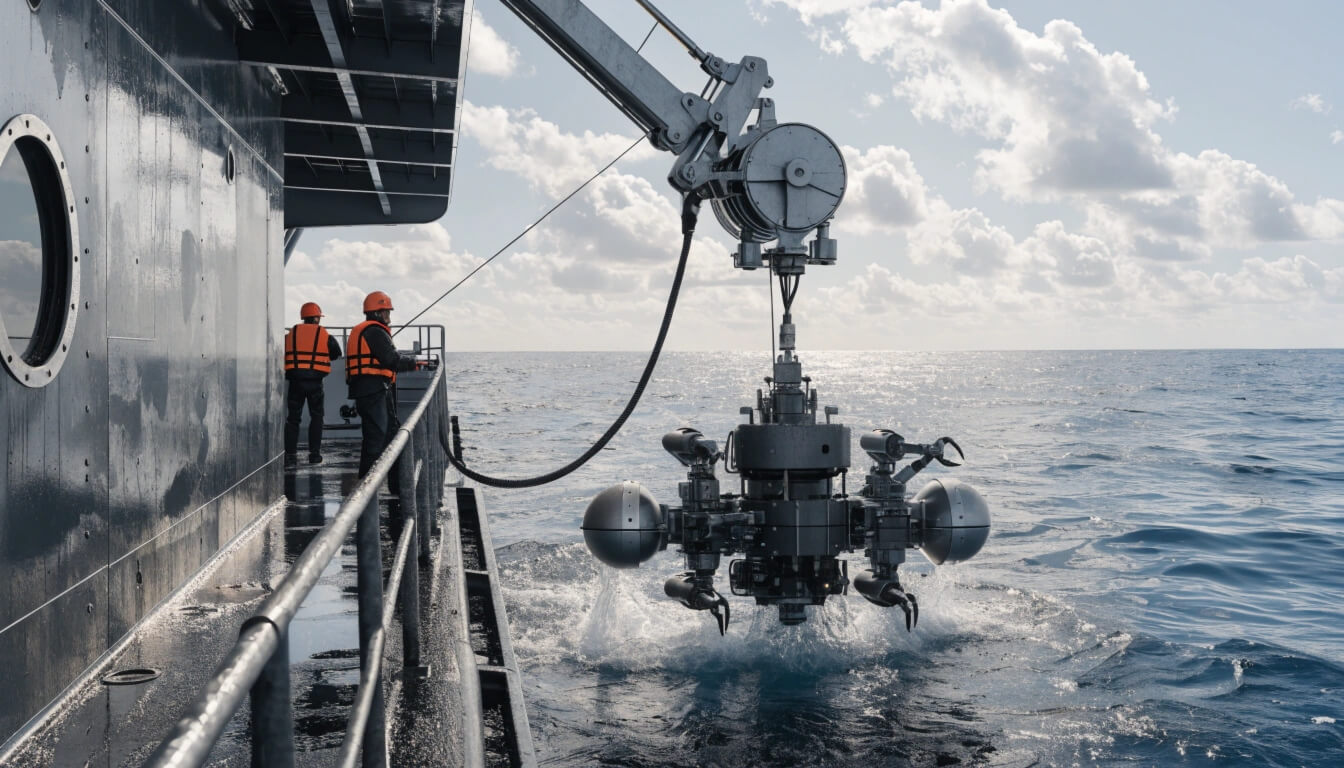
This probably sounds more complicated than you first thought. Don’t worry. I’ve spent over a decade in this industry, helping people translate their underwater challenges into the right equipment choices. It’s my job to turn a client’s need into a selection problem we can solve together. In this post, I’ll walk you through what really matters when choosing an ROV. My goal is to help you avoid the common pitfalls and find the right tool for your specific job. Let’s dive in.
Are You Asking the Right Questions About ROV Specs?
Are you focused on max depth and camera resolution? These numbers can be misleading. Choosing an ROV based on impressive-looking specs alone often results in a tool that fails when you need it most.
Instead of asking for the “best” specs, start by defining your mission. The right question is: “Which specifications are critical for my specific task?” This shifts the focus from raw numbers to practical performance in your operational environment.
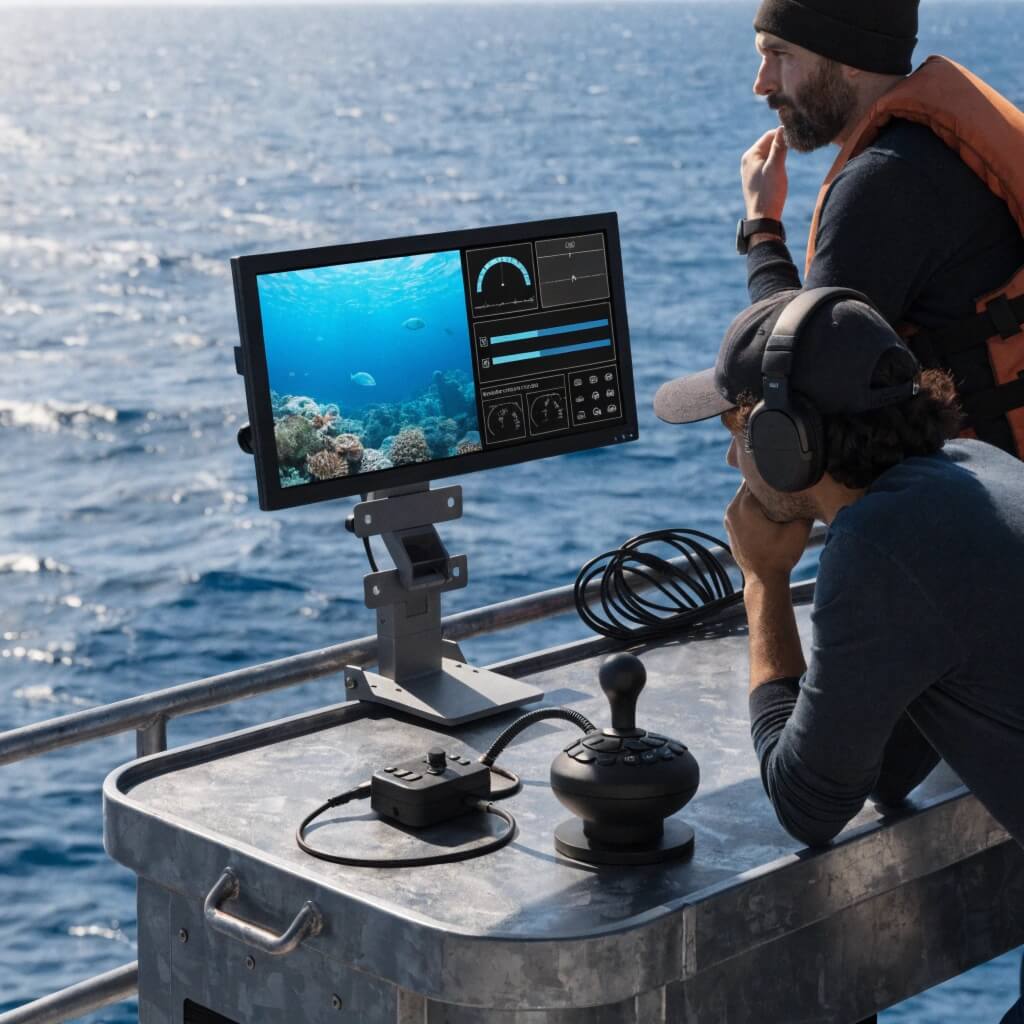
I talk to procurement managers and engineers every day. A common conversation starts with them asking, “What’s your ROV with the deepest depth rating?” or “Which model has a 4K camera?” These are fair questions, but they don’t get to the heart of the matter. The specs sheet doesn’t tell you the whole story.[^3] The most important factor is the mission you need to accomplish. I always turn the question back to them: “What problem are you trying to solve underwater?[^4]” An ROV that’s perfect for inspecting a shallow aquaculture net will be useless for a deep-water salvage operation[^5], regardless of its camera quality. We need to match the tool to the task.
From Vague Specs to Mission-Focused Solutions
Let’s look at how reframing the question leads to a much better equipment choice. Focusing on the job makes the necessary specifications obvious.
| Vague Spec Question | Mission-Focused Question |
|---|---|
| What’s the max depth? | I need to inspect a pipeline at 150 meters. What tether length and thruster power do I need to handle currents at that depth? |
| How good is the camera? | My goal is to identify stress fractures on a dam wall in murky water. What lighting and camera sensor work best in low visibility? |
| What’s the battery life? | My aquaculture pens are large. How long can the ROV operate to complete a full inspection tour on a single charge? |
As you can see, the mission-focused questions reveal much more. For that 150-meter pipeline inspection, you don’t just need a 200-meter depth rating. You need a tether that’s long enough, strong enough to handle drag, and thrusters powerful enough to fight the current[^6] and hold the ROV steady for a clear inspection. For the dam inspection in murky water, 4K resolution is useless if you can’t see anything. Powerful lighting and a camera with a good low-light sensor are far more critical[^7].
Is One ROV Enough for All Your Underwater Tasks?
Are you hoping to buy one ROV to handle everything from simple observation to complex recovery? This “one-size-fits-all” approach often leads to a master-of-none tool that compromises every mission’s efficiency and safety.
No single ROV can excel at every task.[^8] Different missions require different capabilities. An observation-class ROV is nimble but lacks power, while a work-class ROV is powerful but less portable.[^9] Matching the ROV class to the primary task is crucial for success.
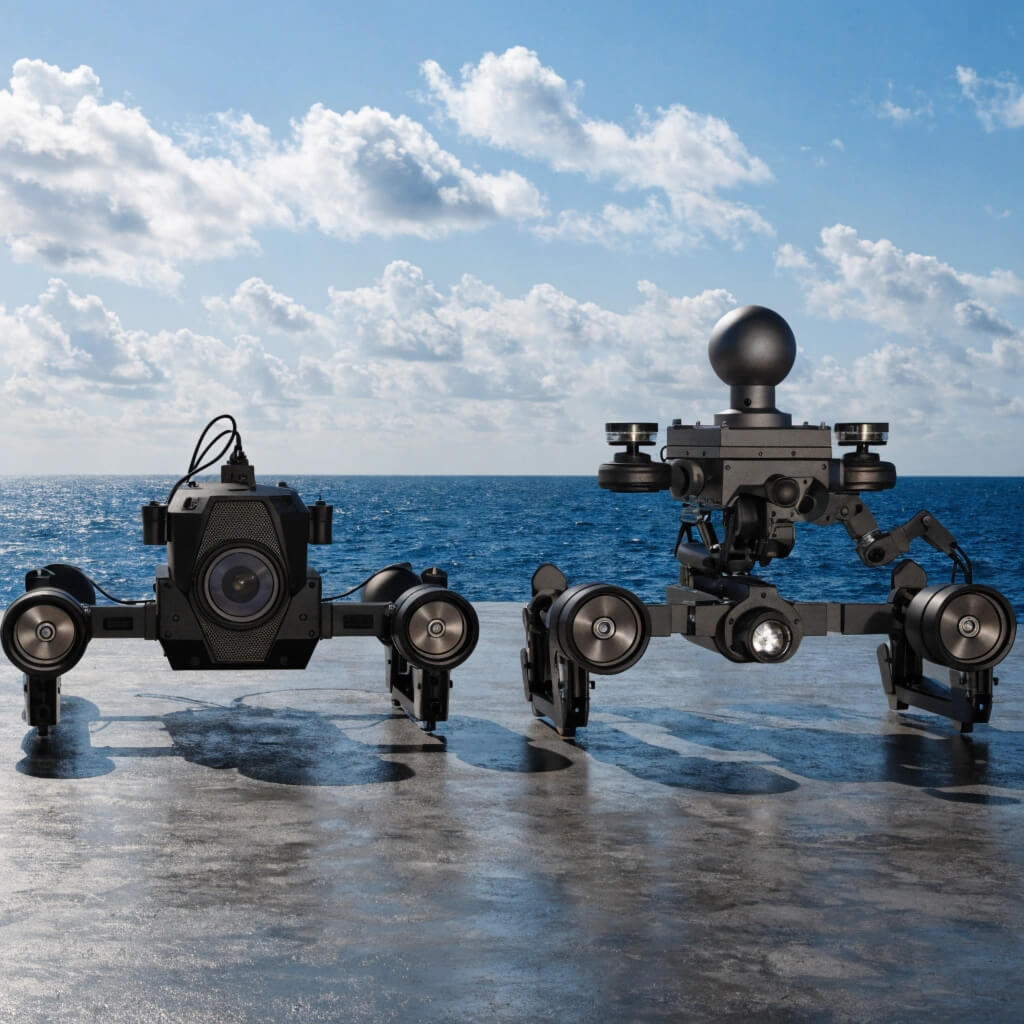
I once had a client who bought a fantastic, lightweight observation ROV for inspecting their fish farm nets. It was agile, easy to deploy, and perfect for that job. A few months later, they called me, frustrated. They had tried to use the same ROV to help locate and recover a lost mooring block. The little ROV was tossed around by the current and didn’t have the power to even attach a line, let alone move the block. They learned a hard lesson: an ROV is a specialized tool. You wouldn’t use a screwdriver to hammer a nail. Similarly, you can’t expect a small inspection vehicle to do the job of a more powerful work-class system.
Matching the ROV to the Mission
The key is to understand the main categories of tasks and the ROV features they demand. While some ROVs offer modular designs allowing you to add tools like sonar or a small grabber, the core platform—its size, power, and stability—determines its fundamental capabilities.
| Mission Type | Key Requirement | Recommended ROV Feature/Class |
|---|---|---|
| Aquaculture Net Inspection | High maneuverability, long uptime | Small, observation-class ROV with multiple vector thrusters and a reliable power system. |
| Search and Recovery | Strong manipulator arm, powerful sonar | Light work-class ROV with a multi-function gripper and high-resolution imaging sonar. |
| Scientific Sampling | Precise positioning, payload capacity | ROV with a Dynamic Positioning (DP) system and space for scientific sensors/samplers. |
| Hull Inspection | Stable platform, good lighting | Small ROV with powerful thrusters to hold position against the hull and excellent LED lighting. |
Thinking this way prevents you from buying a device that “looks good enough” but fails in the field. Be honest about your primary and secondary tasks. If you need to do both observation and light recovery, you might need a more robust, versatile platform, or you might even need two different systems. It’s better to have the right tool for each job than one wrong tool for all of them.
Are You Underestimating the Impact of Field Conditions?
You have the perfect ROV on paper. But what happens when you face strong currents, zero visibility, or a tricky deployment spot? Ignoring real-world field conditions is the fastest way to a failed, or even lost, ROV.
The environment is the biggest variable in any ROV operation. Factors like water current, visibility, potential obstacles, and the deployment location can render a perfectly good ROV useless. A successful mission plan always starts with assessing the field.
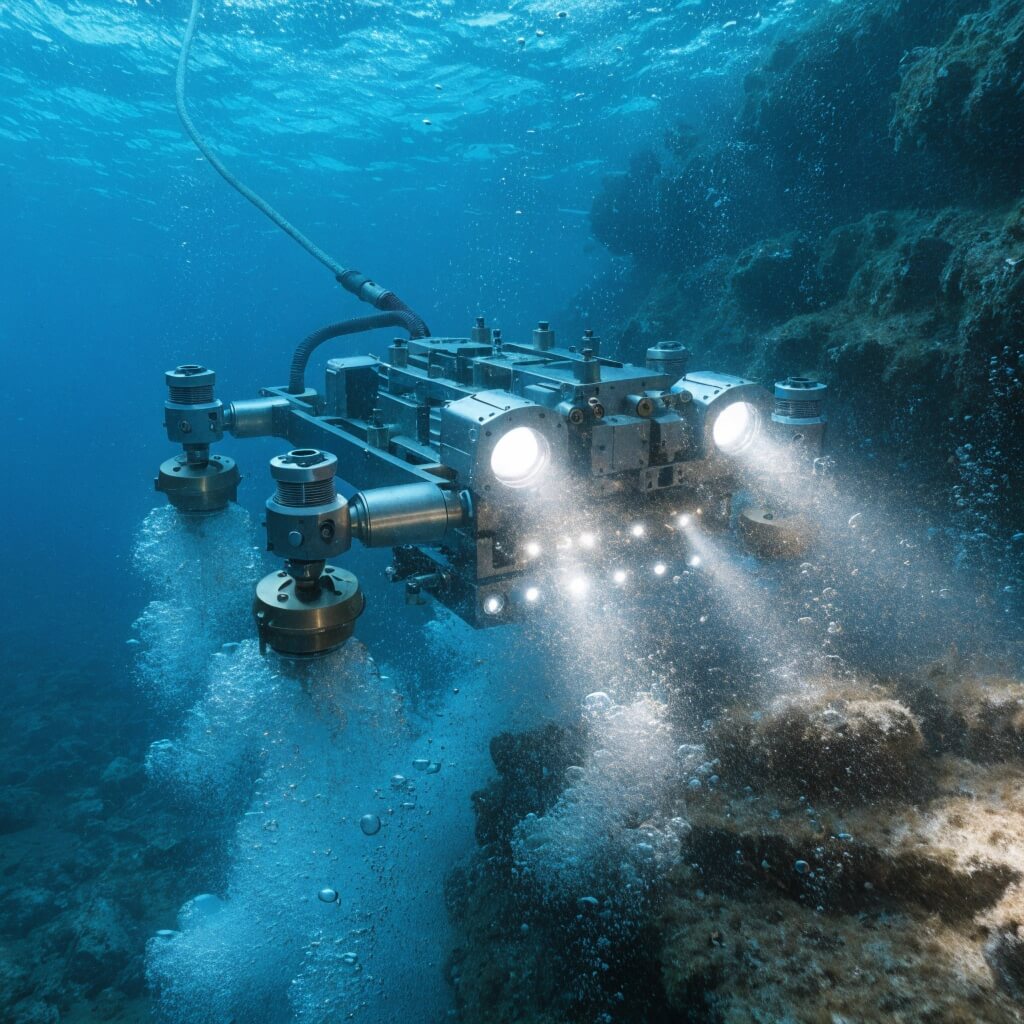
A few years ago, a customer purchased a powerful ROV system from us. The specs were more than enough for their target depth and task. But a week later, they called me, completely stuck. They were operating from a small vessel and the ROV, while powerful, was too heavy and bulky for them to safely launch and recover by hand in choppy seas. The equipment was perfect, but their operational plan had a huge hole in it. They hadn’t considered the logistics of getting the ROV in and out of the water from their specific platform. It’s a classic example of how field conditions—from water currents to the boat you’re on—are just as important as the ROV’s technical specs.
Planning for the Real World
Success isn’t just about the ROV; it’s about the entire system, including the environment and the operator. Before every purchase, we should think through the challenges the ROV will face.
| Environmental Challenge | Impact on ROV | Necessary Feature / Consideration |
|---|---|---|
| Strong Currents (>1 knot) | Difficulty holding position, tether drag | Powerful thrusters, hydrodynamic shape, Dynamic Positioning (DP) system. |
| Low Visibility (Turbid Water) | Operator disorientation, poor video data | High-lumen lighting, low-light camera, imaging sonar for navigation. |
| Entanglement Hazards (Cables, Nets) | Risk of losing the ROV | Tether management system, robust frame, cutters on manipulator arm. |
| Difficult Launch Site (High Pier, Small Boat) | Safety risk, equipment damage | Portability, lightweight design, a reliable launch and recovery system (LARS). |
Never underestimate the power of water. A 1-knot current might not sound like much, but it can easily overpower a small ROV or create so much drag on the tether that the vehicle becomes uncontrollable. Similarly, murky water can make a 4K camera useless. In those conditions, sonar becomes your eyes. Thinking through these real-world scenarios beforehand will guide you to a system that is not just capable, but truly effective for your operations.
Conclusion
Choosing the right ROV isn’t about finding the best specs. It is about deeply understanding your mission, the environment, and matching the right system to those specific needs.
[^1]: “Remotely Operated Vehicles (ROVs)”, https://oceanexplorer.noaa.gov/technology/subs-rovs/. Institutional descriptions of ROVs characterize them as tethered underwater vehicles operated from the surface and equipped with cameras, lights, sensors, and sometimes manipulators, supporting the view of an ROV as an integrated operating system rather than only a submerged camera. Evidence role: definition; source type: institution. Supports: An ROV is a complete underwater work system rather than just a camera in the water.. Scope note: This supports the general definition of an ROV system, not the performance of any specific commercial model.
[^2]: “ROV- Systems – Exploring Naval Underwater STEM”, https://nustem.bridgeport.edu/rov-systems/. Technical ROV overviews describe the vehicle, tether or umbilical, surface control equipment, and task payloads as interdependent parts of ROV operations, supporting the claim that operational effectiveness depends on system integration. Evidence role: mechanism; source type: education. Supports: ROV effectiveness depends on integrating the vehicle, tether, controls, and mission-specific tools.. Scope note: The source would provide general engineering context rather than a quantitative measure of effectiveness across all missions.
[^3]: “Mission Plan – NOAA Ocean Exploration”, https://oceanexplorer.noaa.gov/expedition-feature/24attu-battlefield-features-mission-plan/. ROV training and operations materials commonly distinguish rated specifications from operational planning factors such as currents, tether management, visibility, payload, and launch conditions, supporting the claim that datasheet values alone are insufficient for mission selection. Evidence role: general_support; source type: institution. Supports: An ROV specification sheet alone does not capture all factors needed for effective equipment selection.. Scope note: This supports the general principle of mission-based selection; it does not prove that every datasheet is incomplete.
[^4]: “[PDF] Mission Planning for Multiple Autonomous Underwater Vehicles with …”, https://research.engr.oregonstate.edu/rdml/sites/research.engr.oregonstate.edu.rdml/files/icra24_2620_fi.pdf. Mission-planning guidance for underwater vehicles emphasizes defining operational objectives, environment, payload, and task requirements before selecting equipment, supporting the article’s mission-first framing of ROV specification choices. Evidence role: expert_consensus; source type: institution. Supports: ROV selection should begin with the underwater task or problem rather than isolated specifications.. Scope note: The support is methodological and does not validate the author’s specific procurement process.
[^5]: “Remotely operated underwater vehicle – Wikipedia”, https://en.wikipedia.org/wiki/Remotely_operated_underwater_vehicle. ROV classification references distinguish small observation vehicles from heavier work-class systems designed for deeper, higher-payload, and intervention tasks, supporting the contextual claim that a vehicle suitable for aquaculture inspection may be unsuitable for salvage operations. Evidence role: general_support; source type: encyclopedia. Supports: An ROV suited to shallow aquaculture inspection may be inappropriate for deep-water salvage work.. Scope note: The source would support the class distinction; actual suitability depends on the individual vehicle and operating conditions.
[^6]: “STATION KEEPING OF AN ROV USING VISION …”, https://web.stanford.edu/group/arl/cgi-bin/drupal/sites/default/files/public/publications/LeabourneRFB%2097.pdf. Hydrodynamic and ROV operations literature identifies tether drag and current loading as major contributors to vehicle control requirements, supporting the need to consider tether length, tether strength, and thruster capability for current-exposed inspections. Evidence role: mechanism; source type: paper. Supports: Pipeline inspection at depth requires attention to tether length, tether drag, tether strength, and thruster power in currents.. Scope note: The exact tether and thruster requirements vary by vehicle geometry, current profile, tether diameter, and mission configuration.
[^7]: “Evaluating water clarity, turbidity, and eutrophication status – NOAA”, https://www.noaa.gov/evaluating-water-clarity-turbidity-and-eutrophication-status. Underwater imaging references explain that turbidity, light absorption, and scattering limit visual range and image quality, supporting the claim that illumination and low-light imaging capability can matter more than nominal video resolution in murky water. Evidence role: mechanism; source type: research. Supports: In murky water, lighting and low-light camera performance may be more important than high nominal resolution.. Scope note: This supports the optical mechanism; it does not rank all camera and lighting systems for every turbidity condition.
[^8]: “Observation-Class Inspection ROV – Unmanned Systems Technology”, https://www.unmannedsystemstechnology.com/expo/inspection-rov/. ROV classification sources divide vehicles by size, depth rating, payload, intervention capability, and deployment requirements, supporting the general claim that different underwater tasks are served by different ROV classes. Evidence role: expert_consensus; source type: institution. Supports: No single ROV class is optimal for every underwater task.. Scope note: This is a general classification-based inference; some modular ROVs can perform multiple task types without excelling at all of them.
[^9]: “Remotely operated underwater vehicle – Wikipedia”, https://en.wikipedia.org/wiki/Remotely_operated_underwater_vehicle. Technical descriptions of ROV classes generally associate observation-class vehicles with compact inspection roles and work-class vehicles with larger frames, higher power, manipulators, and greater support requirements, supporting the stated tradeoff between maneuverability and intervention capability. Evidence role: definition; source type: encyclopedia. Supports: Observation-class ROVs are typically more compact and maneuverable, while work-class ROVs are more powerful but less portable.. Scope note: Individual models vary, so the statement should be treated as a class-level generalization rather than a universal rule.

Leave a Reply
Want to join the discussion?Feel free to contribute!